
A diacritic is a glyph added to a letter or to a basic glyph. The term derives from the Ancient Greek διακριτικός, from διακρίνω. The word diacritic is a noun, though it is sometimes used in an attributive sense, whereas diacritical is only an adjective. Some diacritics, such as the acute ⟨á⟩, grave ⟨à⟩, and circumflex ⟨â⟩, are often called accents. Diacritics may appear above or below a letter or in some other position such as within the letter or between two letters.
Hiragana is a Japanese syllabary, part of the Japanese writing system, along with katakana as well as kanji.

Latin phonology continually evolved over the centuries, making it difficult for speakers in one era to know how Latin was spoken before then. A given phoneme may be represented by different letters in different periods. This article deals primarily with modern scholarship's best reconstruction of Classical Latin's phonemes (phonology) and the pronunciation and spelling used by educated people in the late Roman Republic. This article then touches upon later changes and other variants. Knowledge of how Latin was pronounced comes from Roman grammar books, common misspellings by Romans, transcriptions into other ancient languages, and from how pronunciation has evolved in derived Romance languages.
V, or v, is the twenty-second letter in the Latin alphabet, used in the modern English alphabet, the alphabets of other western European languages and others worldwide. Its name in English is vee, plural vees.
W, or w, is the twenty-third letter of the Latin alphabet, used in the modern English alphabet, the alphabets of other western European languages and others worldwide. It represents a consonant, but in some languages it represents a vowel. Its name in English is double-u, plural double-ues.
Estonian orthography is the system used for writing the Estonian language and is based on the Latin alphabet. The Estonian orthography is generally guided by phonemic principles, with each grapheme corresponding to one phoneme.
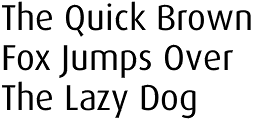
The alphabet for Modern English is a Latin-script alphabet consisting of 26 letters, each having an upper- and lower-case form. The word alphabet is a compound of the first two letters of the Greek alphabet, alpha and beta. The alphabet originated around the 7th century to write Old English from Latin script. Since then, letters have been added or removed to give the current letters:

A digraph or digram is a pair of characters used in the orthography of a language to write either a single phoneme, or a sequence of phonemes that does not correspond to the normal values of the two characters combined.
German orthography is the orthography used in writing the German language, which is largely phonemic. However, it shows many instances of spellings that are historic or analogous to other spellings rather than phonemic. The pronunciation of almost every word can be derived from its spelling once the spelling rules are known, but the opposite is not generally the case.
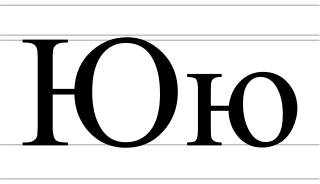
Yu or Ju is a letter of the Cyrillic script used in East Slavic and Bulgarian alphabets.

Yaghnobi is an Eastern Iranian language spoken in the upper valley of the Yaghnob River in the Zarafshan area of Tajikistan by the Yaghnobi people. It is considered to be a direct descendant of Sogdian and has sometimes been called Neo-Sogdian in academic literature. There are some 12,500 Yaghnobi speakers, divided into several communities. The principal group lives in the Zafarobod area. There are also resettlers in the Yaghnob Valley. Some communities live in the villages of Zumand and Kůkteppa and in Dushanbe or its vicinity.
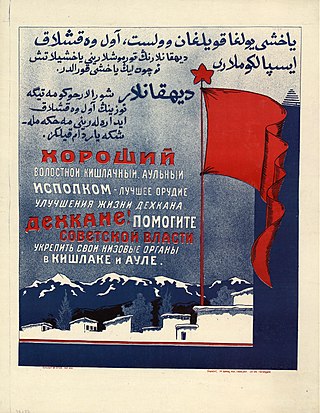
The Turkmen alphabet refers to variants of the Latin alphabet, Cyrillic alphabet, or Arabic alphabet used for writing of the Turkmen language.
Dutch orthography uses the Latin alphabet. The spelling system is issued by government decree and is compulsory for all government documentation and educational establishments.
The phonology of the Persian language varies between regional dialects, standard varieties, and even from older variates of Persian. Persian is a pluricentric language and countries that have Persian as an official language have separate standard varieties, namely: Standard Dari (Afghanistan), Standard Iranian Persian and Standard Tajik (Tajikistan). The most significant differences between standard varieties of Persian are their vowel systems. Standard varieties of Persian have anywhere from 6 to 8 vowel distinctions, and similar vowels may be pronounced differently between standards. However, there are not many notable differences when comparing consonants, as all standard varieties a similar amount of consonant sounds. Though, colloquial varieties generally have more differences than their standard counterparts. Most dialects feature contrastive stress and syllable-final consonant clusters.

Spanish orthography is the orthography used in the Spanish language. The alphabet uses the Latin script. The spelling is fairly phonemic, especially in comparison to more opaque orthographies like English, having a relatively consistent mapping of graphemes to phonemes; in other words, the pronunciation of a given Spanish-language word can largely be predicted from its spelling and to a slightly lesser extent vice versa. Spanish punctuation uniquely includes the use of inverted question and exclamation marks: ⟨¿⟩⟨¡⟩.
Ancient Greek has been pronounced in various ways by those studying Ancient Greek literature in various times and places. This article covers those pronunciations; the modern scholarly reconstruction of its ancient pronunciation is covered in Ancient Greek phonology.
The spelling of Gwoyeu Romatzyh (GR) can be divided into its treatment of initials, finals and tones. GR uses contrasting unvoiced/voiced pairs of consonants to represent aspirated and unaspirated initials in Chinese: for example b and p represent IPA [p] and [pʰ]. The letters j, ch and sh represent two different series of initials: the alveolo-palatal and the retroflex sounds. Although these spellings create no ambiguity in practice, readers more familiar with Pinyin should pay particular attention to them: GR ju, for example, corresponds to Pinyin zhu, not ju.
The traditional English pronunciation of Latin, and Classical Greek words borrowed through Latin, is the way the Latin language was traditionally pronounced by speakers of English until the early 20th century.
Middle English phonology is necessarily somewhat speculative, since it is preserved only as a written language. Nevertheless, there is a very large text corpus of Middle English. The dialects of Middle English vary greatly over both time and place, and in contrast with Old English and Modern English, spelling was usually phonetic rather than conventional. Words were generally spelled according to how they sounded to the person writing a text, rather than according to a formalised system that might not accurately represent the way the writer's dialect was pronounced, as Modern English is today.
In contemporary Japanese writing, foreign-language loanwords and foreign names are normally written in the katakana script, which is one component of the Japanese writing system. As far as possible, sounds in the source language are matched to the nearest sounds in the Japanese language, and the result is transcribed using standard katakana characters, each of which represents one syllable. For example, America is written アメリカ (A-me-ri-ka). To accommodate various foreign-language sounds not present in Japanese, a system of extended katakana has also developed to augment standard katakana.
